Reject Any Quote That Skips the Spot Price
$787.05 is the melt value of a 10-gram 14K chain when spot gold sits at $4,184.63 per troy ounce, the October 13, 2026 figure on MetalCharts. The chain holds 5.85 grams of pure gold, which is 10 grams times 0.585. Every buyer starts from that melt number and pays you a share of it. APMEX notes that local shops rarely show the purity and weight math behind their offers, so the share you receive stays hidden unless you ask.
Offer equals melt times percentage, so a quiet change in the spot price or the percentage moves the offer, and a bare dollar figure hides both. I’d walk away from any buyer who quotes dollars and nothing else. Kitco lists $5,589.38 on January 28, 2026 as the peak, and the October figure sits about a quarter lower, so a seller anchored on January may call a fair offer insulting.
Rank Cash for Gold Houston Buyers by Percentage of Melt
Most sellers want to know what percentage counts as good. MeltValue.com says strong jewelry buyers cluster between 70 and 80 percent of melt, and its calculator page widens the band for reputable buyers to 70 through 90. An older ABC News test topped out near 85 percent at a New York jeweler. On that 10-gram chain, 70 percent pays $550.94, and 85 percent pays $668.99, a gap of $118.05 for the same metal.
APMEX frames the trade plainly. Local shops hand cash over immediately but pay a smaller share of the metal’s value, while mail-in refiners pay closer to market in exchange for shipping and a wait. Mail-in works when you can wait and fails when rent is due Friday.
I’d rank every written quote above any spoken number, and a refiner’s written quote above a shop’s only when I can afford the wait. Collect at least three written figures before you commit, a habit MeltValue.com also recommends.
Make a Beat-Any-Offer Guarantee Work for You
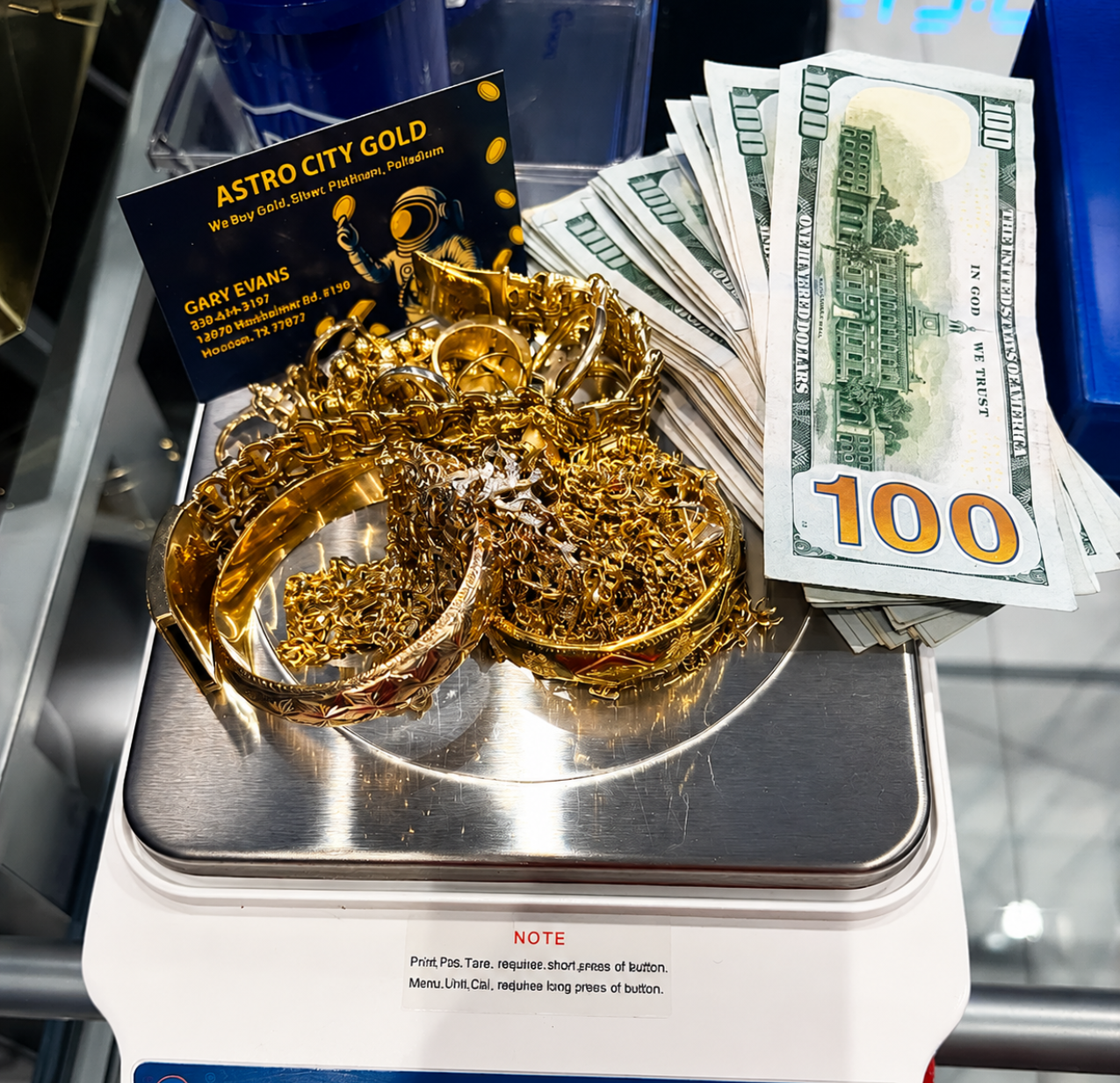
A promise to beat any local offer sounds like the end of shopping around. It helps only when the offer you carry in is written and measured in the same unit the buyer uses. astro city gold advertises a promise to top any genuine written bid from a rival Houston shop, and the same page says it weighs scrap on certified scales while you watch.
Units are where written quotes go wrong. A pennyweight is 1.555 grams. Quoted per pennyweight, the same gold appears roughly 55 percent richer than a per-gram figure, MetalCharts notes. A seller who compares the two at face value may take the worse bid and never know it.
For cash for gold Houston offers, I’d convert every quote to the unit my own scale reads before comparing any two, since a unit slip can erase a real advantage. The FTC urges jewelry shoppers to have sellers write down every fact they relied on, and that habit protects people who sell gold just as it protects people who buy it.
Sell Whole Pieces as Jewelry Before You Accept Scrap
Scrap pricing pays for metal and nothing else, so an intact signed piece can lose value the moment it hits a melt scale. A jewelry expert quoted by WECT advises scrapping only pieces in poor condition, since sound ones can fetch more as estate jewelry. I’d scrap the snapped chain and keep the signed ring out of the pile.
Check the stamp first, since the FTC warns that 14K gold and gold-plated pieces are different products and a cash for gold Houston counter will price them far apart. Pull precious gems out before a refiner sale, WECT’s expert adds, because a refiner pays for the gold alone.
Look for the Dealer Registration Before You Hand Anything Over
Texas regulates more of this trade than most sellers assume. A 2013 state House analysis of S.B. 288 says dealers in jewelry and silverware must sign up with the Office of Consumer Credit Commissioner and post that registration publicly. Buyers of coins and bars only, plus licensed pawnshops, fall outside that definition. Ask where the registration is posted, because a shop that hesitates has already told you something. I’d look for the registration notice at any jewelry counter, and I’d confirm current rules with the commissioner’s office because statutes change.
Sort, Weigh and Collect Three Written Quotes
Sort your pieces by karat and weigh each pile before you call anyone. Then ask three buyers for a written percentage of melt and the spot price behind it, and bring those papers to a cash for gold Houston shop that offers to beat written bids. A buyer who cannot or will not provide both has told you enough.
Frequently Asked Questions
Q: How much will I get for 14K gold in Houston?
A: That depends on weight, karat, the day’s spot price and the share of melt the buyer pays. For a 10-gram 14K chain, a buyer paying 75 percent of melt would offer roughly $590 at the October 13, 2026 spot of $4,184.63. The offer moves in step with gold, so a quote from last week may already be stale.
Q: Can police hold my gold after I sell it?
A: A peace officer with reasonable suspicion that a piece is stolen can place a hold of up to 60 days, according to the Texas Occupations Code, and the dealer may not melt or alter the item until a written release or court order arrives. Keep receipts or photos that show you own what you sell.
Q: Do cash for gold stores pay less than other buyers?
A: Often, yes, which is why a written percentage matters. One calculator site reports that bullion coins and bars fetch the most, while cash-for-gold and pawn outlets often pay less. A shop that puts its percentage and spot price on paper has earned a closer look.
Q: Does a missing registration notice mean a gold buyer is shady?
A: It depends on what the shop buys. The Texas analysis excludes buyers who deal only in coins, bars or medals, so a coin-only counter may have nothing to post. A shop that takes jewelry is another matter, and I’d ask where its registration hangs before handing over a ring.